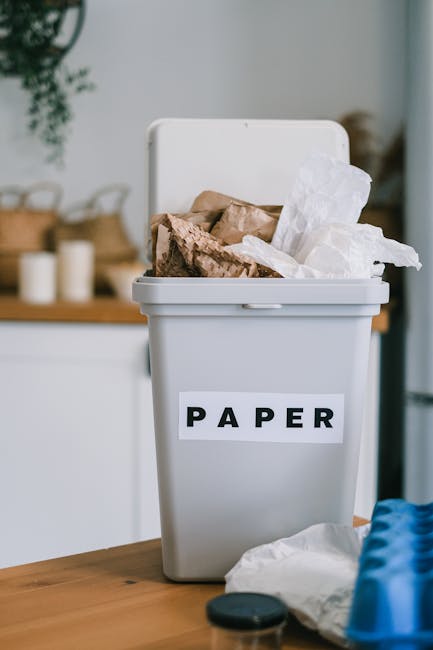
Room-by-room Small Rubbish Sorting Checklist for UK Homes
If you have ever stared at a drawer, cupboard, or spare room and thought, "How did all this even get here?", you are in the right place. A Room-by-room Small Rubbish Sorting Checklist for UK Homes turns a messy, time-draining clear-out into a calm, repeatable process. Instead of moving random items from one corner to another, you sort small rubbish properly, identify what can be reused or recycled, and decide what needs specialist collection.
That matters in UK homes because space is limited, council collection rules vary, and mixed waste is easy to get wrong. A good room-by-room system also makes it much easier to separate ordinary household waste from bulky items, white goods, old furniture, and awkward things like mattresses or broken appliances. If you are planning a full tidy-up, a move, or just want to reclaim some breathing room, this guide will walk you through the process in a practical way.
For larger or more awkward items that fall outside normal bin day, it can help to compare options such as bulky waste collection, rubbish removal, or a broader home clearance service. The right choice depends on what you are clearing, how much there is, and how quickly you need it gone.
Table of Contents
- Why room-by-room sorting matters
- How the checklist works
- Key benefits and practical advantages
- Who this is for
- Step-by-step guidance
- Expert tips for better results
- Common mistakes to avoid
- Tools, resources and recommendations
- Law, compliance and best practice
- Options and comparison table
- Case study example
- Practical checklist
- Conclusion
- Frequently asked questions
Why Room-by-room Small Rubbish Sorting Checklist for UK Homes Matters
Small rubbish is rarely dramatic, which is exactly why it builds up unnoticed. A broken plug, a duplicate charger, packaging from deliveries, old cosmetics, a cracked mug, expired medicines, a few rogue batteries, and a drawer full of "I might need this later" items can quietly fill a home. Left alone, those bits become clutter, and clutter makes it harder to keep your house clean, safe, and easy to use.
Room-by-room sorting matters because different areas generate different waste streams. A kitchen produces food packaging and occasional food waste; a bedroom creates worn textiles and bedside clutter; a bathroom hides expired toiletries and empty containers; an office fills with paper, ink cartridges, cables, and dead tech. Treating every room the same is where most people get stuck. Treating each room as its own mini-project is what keeps momentum going.
There is also a practical UK angle. Councils often accept some items but not others, and many households are unsure what goes in the residual bin versus recycling, what needs a special drop-off, and what should be collected separately. If you are not sure whether something is a small waste item or the start of a bigger clearance job, that is often the moment to look at waste collection or waste disposal options rather than trying to improvise on bin day.
Expert summary: The best clutter clean-up is not the biggest one. It is the one you can repeat room by room without losing energy halfway through.
How Room-by-room Small Rubbish Sorting Checklist for UK Homes Works
The checklist works by breaking your home into manageable zones and sorting items into clear categories before anything leaves the room. That sounds simple, but the structure is what makes it effective. Without it, people usually create three problems: they keep moving the same items around, they mix recyclable and non-recyclable waste, and they lose track of what needs a specialist collection.
The process is straightforward:
- Choose one room only.
- Gather three or four containers or bags for sorting.
- Remove obvious rubbish first.
- Separate items by type: recycle, reuse, donate, general waste, and special disposal.
- Deal with anything hazardous or awkward last.
- Only then move to the next room.
In practice, the system works because it reduces decision fatigue. You are not deciding the fate of the whole house at once. You are just dealing with the bathroom shelf, the kitchen drawer, or the hallway basket. That is much easier to finish on a weekday evening, and a lot less likely to turn into a weekend saga.
For mixed household clear-outs, it can help to keep one rule in mind: if an item is too large, too heavy, or too awkward for normal household waste, it probably belongs in a dedicated route such as large item collection or council large item collection. Small rubbish stays small; larger objects need a different plan.
Key Benefits and Practical Advantages
A room-by-room approach does more than make tidying easier. It creates a system you can actually stick to. That matters because the real challenge is rarely knowing that clutter is annoying. The challenge is finishing the job.
- Cleaner sorting: You separate recyclable material, general rubbish, and special waste before it gets mixed together.
- Faster decisions: Smaller batches reduce overwhelm and make it easier to act immediately.
- Less wasted effort: You are not carrying piles from room to room only to sort them again later.
- Better use of council services: You can see whether items fit normal collection, a council route, or a private service.
- Improved safety: You spot broken glass, batteries, and damaged items earlier.
- More usable space: Drawers, shelves, and corners become functional again instead of acting as storage for "temporary" rubbish that lasted six months.
There is also a subtle mental benefit. A tidy landing or clean kitchen counter changes how a home feels. Not magically, of course. But enough that you stop noticing the clutter every time you walk past it. That is a real win.
For items like old sofas, mattresses, or appliances that do not belong in a general rubbish pile, dedicated services such as mattress disposal, sofa removal, or fridge disposal can save time and reduce the risk of an improper disposal mistake.
Who This Is For and When It Makes Sense
This checklist is useful for a wide range of households, but it is especially practical if your home has one or more of these situations:
- You are doing a seasonal tidy-up and want a clear routine.
- You live in a flat or smaller UK property where storage space is tight.
- You are preparing for guests, moving house, or renting out a property.
- You have just finished a DIY project and want to sort the aftermath.
- You are clearing an inherited property and do not want to miss small items hidden in rooms and cupboards.
- You need to separate everyday rubbish from larger clearance items.
It is also handy for landlords, letting agents, and anyone managing a home with a spare room, loft, garage, or utility area. Those spaces accumulate odd items quickly: broken blinds, spare fittings, empty paint tins, packaging, old rugs, spare tools, and the sort of "I'll deal with it later" stuff that becomes a miniature archive of procrastination.
If the home has already tipped from a quick tidy into a full-room clearance, consider a more comprehensive route like flat clearance, house clearance, or rubbish clearance rather than trying to manage everything through bin bags alone.
Step-by-Step Guidance
Here is a practical way to work through the house without losing momentum. Keep it simple and be strict about the room boundary.
1. Start with the easiest room
Choose a room where success is likely. For many homes, that is the hallway, bathroom, or a small bedroom. Starting with an easy win builds confidence, which sounds soft until you realise it is often the difference between finishing and giving up halfway through.
2. Clear surfaces first
Take obvious rubbish off tables, shelves, counters, and bedside surfaces. Receipts, dried-out pens, old packaging, dead batteries, worn-out toiletries, and broken bits should come off first. This instantly reduces the visual noise in the room.
3. Sort into practical categories
- Recycle: paper, card, clean plastic, empty containers, and other accepted recyclable materials.
- General waste: contaminated packaging, tissues, mixed material items, and anything not accepted locally.
- Reuse or donate: items in good condition that still have life left.
- Special disposal: batteries, lightbulbs, small electricals, medicines, paint, or anything your local route treats separately.
4. Deal with hidden spaces
Look in drawers, under sinks, behind doors, and in cupboards. Many homes have a "small rubbish shelf" or a drawer that quietly becomes a dumping ground for loose clutter. Do not forget that one.
5. Remove one category at a time
Take the bags or boxes out in a sensible order. Recyclables first, then general waste, then anything that needs a separate collection or drop-off. Keeping categories separate prevents contamination and makes disposal easier.
6. Note bulky or awkward items separately
If you uncover something that is not really small rubbish - a broken desk, old wardrobe shelf, mattress, washer, or sofa cushion that has seen better days - stop and set it aside for the right service. You can review furniture disposal, bed disposal, or white goods recycle if needed.
7. Finish the room before moving on
Do not half-finish a bedroom, then jump to the loft, then start the kitchen. That is how clutter becomes a tour of the entire home. Finish one room, close the loop, and move on.
Expert Tips for Better Results
A few small habits can dramatically improve the outcome.
- Use a timer: Twenty or thirty minutes is often enough for one room. You do not need a heroic all-day session.
- Work top to bottom: Start with shelves and counters, then move to drawers and floor-level storage.
- Keep a "question" box: If you are unsure whether something should be kept, donated, or disposed of, place it in one temporary box and revisit it later.
- Label your bags clearly: Recycle, waste, donate, batteries, electricals. Simple labels reduce mistakes.
- Separate damp or contaminated items: A greasy food box or wet tissue can ruin a recycling bag fast.
- Plan the exit before you start: Know where each bag or item will go once it leaves the room.
In our experience, the biggest productivity boost comes from making the disposal decision at the same moment you pick up the item. If you place it "to sort later", later arrives with friends.
If your sorting turns up more than expected, it may be worth comparing a direct private collection with a council route. For example, council waste collection can suit simpler jobs, while waste removal or bulk waste collection may be more practical for larger volumes or mixed items.
Common Mistakes to Avoid
Most sorting jobs go wrong in predictable ways. Avoid these and you will save time.
- Mixing categories too early: Once recycling and general waste are mixed, sorting becomes harder and slower.
- Starting with the loft or garage: Big storage areas often hide the hardest decisions. Build momentum elsewhere first.
- Ignoring small hazardous items: Batteries, sharp objects, and electrical waste need attention, not a quick toss into the nearest bag.
- Overfilling bags: Heavy bags are awkward to lift and more likely to split.
- Saving "maybe" items forever: If you have not used it, worn it, or needed it for a long time, it probably deserves a decision.
- Forgetting local rules: Councils do not all accept the same items in the same way, so a one-size-fits-all assumption can backfire.
Another classic mistake is treating all disposal as if it were the same job. A few broken hangers and food wrappers are not the same as a fridge, a mattress, or a sofa. If you need a dedicated route for one of those, use the specific service rather than forcing it into a general rubbish plan.
Tools, Resources and Recommendations
You do not need much to do this well, but a few basics help enormously.
- Two to four sturdy bags or boxes for sorting
- A marker pen or labels
- Rubber gloves for dusty cupboards or sharper items
- A small dustpan and brush
- Microfibre cloth for quick wipe-downs after clearing a surface
- Phone notes for items that need a special collection
For disposal planning, it is worth knowing the difference between clearing and collection. If your job is a simple set of loose bags or small items, a general waste collection or rubbish removal option may be enough. If the room contains a mixture of clutter, old furniture, and a few awkward extras, a broader waste clearance or furniture clearance service may be the better fit.
It also helps to check the organisation's policy pages if you want reassurance on service standards. Pages such as health and safety policy, insurance and safety, and recycling and sustainability are useful reference points when you want to understand how a provider approaches safe handling and responsible disposal.
Law, Compliance, Standards, or Best Practice
For everyday household sorting, the main point is to follow your local council's guidance and avoid mixing items that require separate handling. Council rules can differ, especially for food waste, electrical items, batteries, garden waste, and large objects. If you are unsure, check the local authority guidance before putting something out for collection.
Best practice is simple: keep waste streams clean and separate, do not overfill containers, and do not place hazardous items in general bags. Sharp broken glass should be wrapped safely. Batteries and small electricals should be set aside rather than thrown into mixed household waste. Some items may need specialist collection or a designated recycling point.
If you are clearing rented accommodation, a managed flat, or a property with mixed waste types, the compliance bar is a little higher in practice because you need to avoid leaving behind unusable or contaminated waste. In those cases, a service like office clearance can also be relevant for home office spillover, while business waste removal may be suitable where household and work items overlap.
When in doubt, choose the safer, clearer route. A tidy bin bag is useful. A mixed bag of unknowns is not.
Options, Methods, or Comparison Table
Here is a simple comparison of common ways to deal with sorted household rubbish and leftover items.
| Method | Best for | Pros | Limitations |
|---|---|---|---|
| Normal council bin and recycling | Small, routine household waste | Convenient and familiar | Limited capacity; item rules vary |
| Council rubbish collection | Items accepted by the local authority | Often cost-effective | Collection times and item limits can be restrictive |
| Council large item collection | Occasional larger household items | Useful for one-off bulky objects | May require booking and advance planning |
| Bulky waste collection | Mixed bulky household items | Handy for more than one awkward item | Not ideal for fine-grained sorting needs |
| House clearance | Whole-home or multi-room clear-outs | Efficient for larger jobs | More than you need for a few bags of small rubbish |
The best option depends on how much you have and how much effort you want to spend managing it yourself. A few bags of clutter are one thing. A room full of mixed waste plus furniture is another entirely.
Case Study or Real-World Example
Consider a typical two-bedroom flat after a few months of busy living. The kitchen has packaging, a broken utensil, and expired cupboard items. The bathroom has old toiletries and empty containers. The spare room has cables, a cracked lamp shade, and a small pile of unused storage boxes. The hallway has a broken shoe rack and a couple of random parcels that were never unpacked properly.
Instead of tackling the entire flat in one long session, the resident works room by room over two evenings. The kitchen is sorted first into recycling, general waste, and a small bag of items to take to the right recycling point. The bathroom takes ten minutes once expired products are gathered together. The spare room reveals a more awkward item: an old chair that is beyond repair. That item is set aside for furniture disposal. The hallway gets the quickest win of all because the loose bits are easy to remove.
By the end, the home is not just tidier. The waste is separated properly, the clutter is reduced in manageable chunks, and there is no giant "deal with later" pile waiting in the corner. That is the whole point of the checklist: steady progress without the chaos.
Practical Checklist
Use this as your room-by-room sorting flow. It is deliberately simple so you can use it without thinking too hard.
- Choose one room only.
- Bring sorting bags or boxes.
- Clear visible rubbish from surfaces.
- Check drawers, shelves, and cupboards.
- Sort into recycle, waste, donate, and special disposal.
- Set aside batteries, bulbs, and small electricals.
- Wrap broken sharp items safely.
- Keep bulky items separate.
- Take waste out in labelled stages.
- Finish the room before starting the next one.
If you need a quick next step after sorting, review whether your leftover items fit a service like garage clearance, loft clearance, or waste clearance style support where available, especially if one room is hiding more than a few bagfuls.
Conclusion
A room-by-room approach is one of the simplest ways to make household sorting manageable. It keeps you focused, improves recycling accuracy, and helps you spot when an item needs something more than ordinary bin collection. Just as importantly, it stops the job from turning into a confusing pile-up of bags and half-finished decisions.
For UK homes, that structure is especially valuable because disposal rules, property sizes, and collection options vary so much. Whether you are clearing a small flat, a family house, or a single cluttered room, the method gives you a practical way to move forward without overthinking every item. Start small, sort carefully, and let each room close properly before you move to the next one.
If you have a mix of small rubbish and bigger unwanted items, the smartest next move is to compare the right disposal route before you lift another bag. A clear plan saves time, avoids mistakes, and usually makes the whole process feel lighter.
Get a free quote today and see how much you can save.
Frequently Asked Questions
What counts as small rubbish in a UK home?
Small rubbish usually means loose household waste you can carry in a bag or box: packaging, broken small items, old toiletries, paperwork, and similar clutter. It does not include bulky furniture, appliances, or large furniture parts.
How do I sort rubbish room by room without getting overwhelmed?
Start with one room, use separate bags for each category, and finish that room before moving on. Keeping the job small is what makes it manageable. A timer helps too, because a short session is less daunting than a full-day clear-out.
Should I recycle everything that looks recyclable?
Not always. Items need to be clean and accepted by your local recycling system. Greasy packaging, mixed-material items, and contaminated waste often belong in general waste rather than recycling.
What should I do with batteries and small electrical items?
Keep them separate from ordinary rubbish. Batteries, cables, chargers, and small electricals often need special handling or a dedicated drop-off point. Do not throw them into mixed household waste if you can avoid it.
Can I use this checklist for a flat as well as a house?
Yes. It works very well for flats because storage is often limited and clutter builds up faster in smaller spaces. The room-by-room method is especially useful when you need to work around tight hallways or shared access.
When should I book a bulky waste collection instead of doing it myself?
If you uncover items that are too large, heavy, or awkward for normal bags, a bulky waste route is usually the better choice. That is especially true for sofas, mattresses, fridges, or several large items at once.
What is the best room to start with?
Start with the easiest room, not the most cluttered one. A bathroom, hallway, or small bedroom often gives a quick win and helps you build momentum before tackling trickier spaces like lofts or garages.
How do I deal with items I am unsure about?
Put them in a temporary "question" box and come back to them later. That stops your sorting session from stalling while you make a decision about every single item on the spot.
Is it better to use council collection or a private clearance service?
It depends on the items and how quickly you need them removed. Council services can work well for eligible items, but private clearance is often easier for mixed loads, awkward items, or larger volumes. Compare the practical fit rather than assuming one is always better.
Do I need to wash containers before recycling them?
Usually, containers should be reasonably empty and clean enough not to contaminate the recycling load. A quick rinse is often enough for food containers, but heavily soiled items may need to go in general waste instead.
What if my sorting turns into a bigger clear-out than expected?
That happens often. Once you open a cupboard or spare room, the scale can change quickly. If you reach that point, it may be more efficient to switch from small waste sorting to a fuller service such as home clearance or furniture clearance.
How often should I do a room-by-room rubbish sort?
Many households find a light monthly tidy and a deeper seasonal sort works well. The right rhythm depends on how much stuff enters the home, how much storage you have, and whether certain rooms collect clutter faster than others.